
Senior communities play a critical role in reducing isolation among older adults. Research shows that the number of seniors who reported feeling lonely most of the time dropped from 69% before moving to a senior living community to 42% after their move.
But proximity alone doesn’t guarantee connection—and 42% is still an alarming number, especially when isolation has been linked to physical and mental health risks. To continue combatting loneliness in senior living, communities must intentionally create environments and experiences that encourage residents to gather, interact, and engage with one another.
One opportunity lies in a familiar amenity: the television.
Older adults watch an average of four or more hours of TV per day, making it one of the most-used amenities in senior living communities. When used thoughtfully, entertainment can do more than fill time—it can help transform shared spaces into social hubs.

Bringing more life to common areas
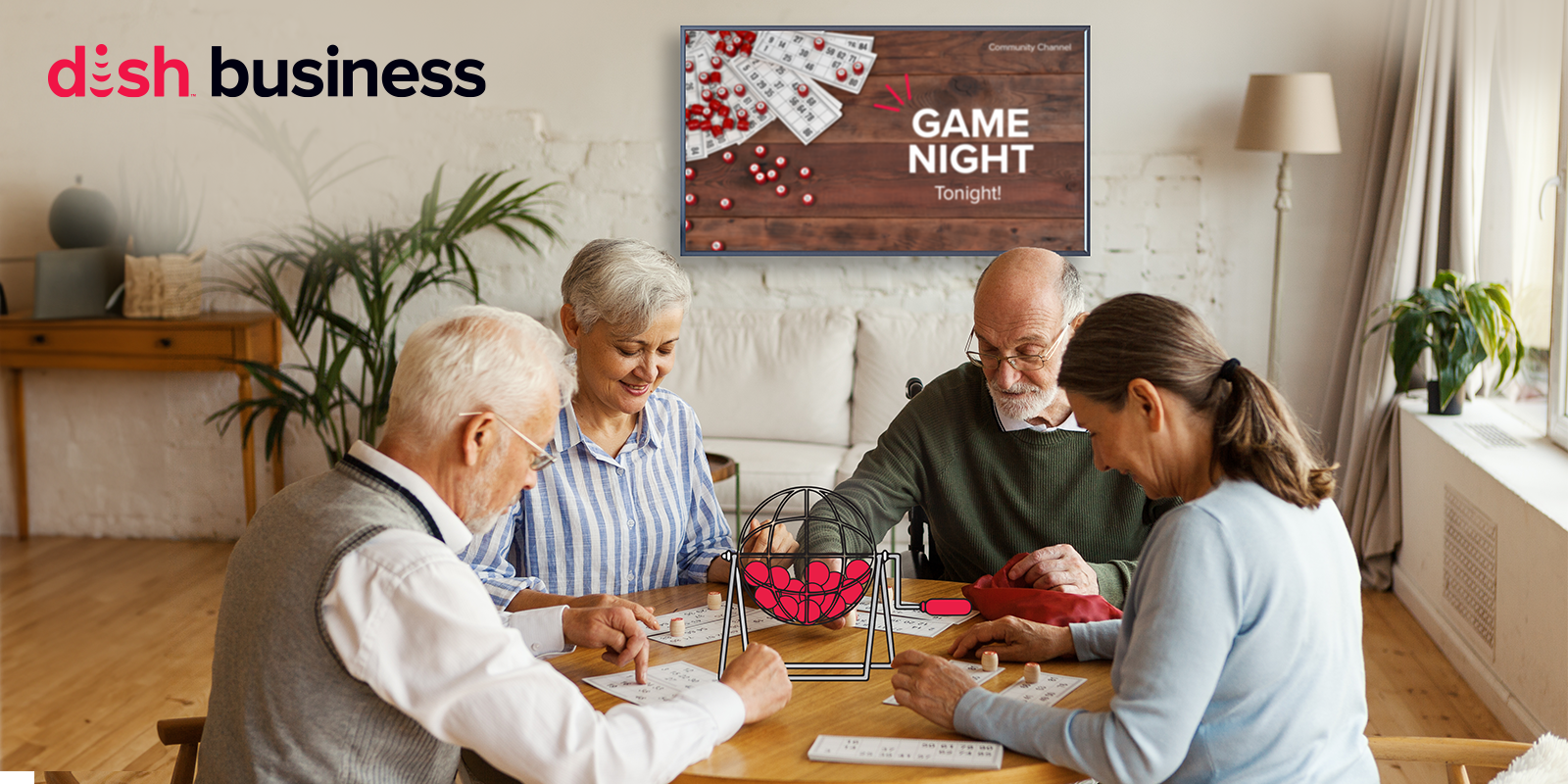
Common areas serve as natural gathering points for patients and residents. A classic movie screening can turn a quiet lounge into a comfortable theater. Trivia nights, bingo games, or watch parties for major televised events can draw residents out of their rooms and into shared spaces. In some communities, common area TVs can also be used for group fitness classes.
Design plays an important role in supporting these interactions. Comfortable seating, good sightlines, and flexible layouts can help common areas feel more like living rooms than clinical spaces.
Establishing routines and encouraging participation
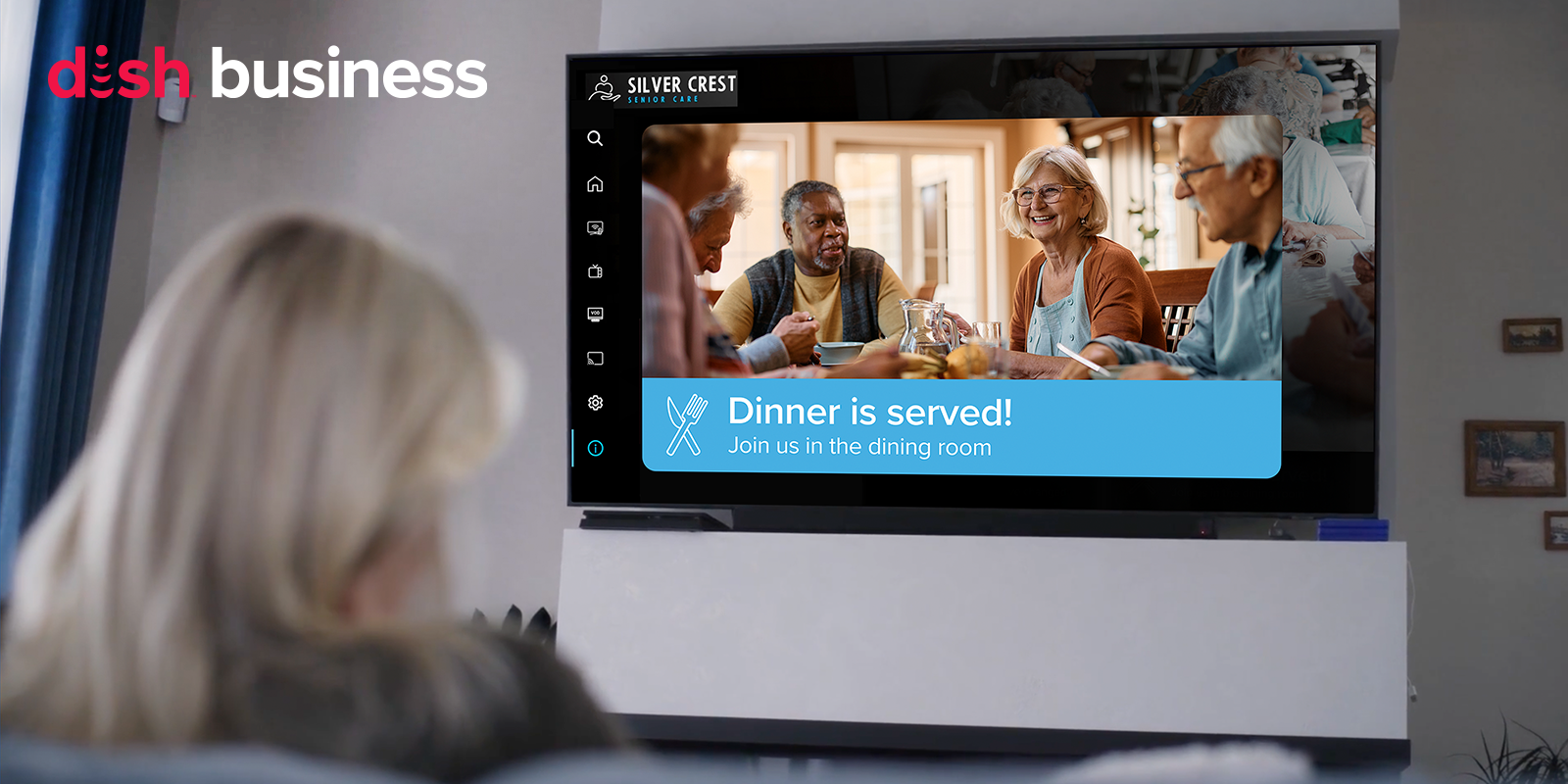
For residents adjusting to life in a new community, maintaining routines can be important for both comfort and well-being. “With on-screen notifications and community channels that highlight activities, meal times, or wellness tips, residents can stay on track with their routines,” says Peter Feeney, VP of DISH Business. Making this information visible throughout the community can encourage residents to participate in events they might otherwise miss.
Programming that resonates
Content also plays a role in participation. Residents are more likely to join shared viewing experiences when the programming reflects their interests.
“For years, entertainment in long-term care was built around what the Silent Generation appreciated: routine, simplicity, and scheduled group activities. But Baby Boomers
want Spotify, TED Talks, and choice. They’re beginning to enter long-term care settings with very different expectations from previous generations,” adds Matt Catlin, General Manager, DISH Business.
Senior-friendly programming and accessible design can make entertainment easier to enjoy, and streaming from popular apps like Netflix ensures residents stay on top of their favorite content. Larger on-screen text, interactive channel guides, and familiar channel logos can also help reduce frustration and make shared technology more approachable for older adults.
Staying connected—even from the room
Not every resident is always able to attend community events in person. Illness, recovery, or mobility limitations can temporarily keep residents in their rooms. In these situations, in-room entertainment can help residents stay connected to happenings around the community. Some communities stream events or share updates through dedicated channels so residents can still follow along.
“OnStream from DISH Business features include integrated community channels and content right in the TV lineup, allowing residents to stream live events happening around the community directly from their rooms,” explains Feeney.
Similarly, if a patient or resident wants to catch up on a family member’s recital or game, OnStream lets residents and family members easily cast directly from their devices to their TVs, ensuring big moments are seen on the big screen.
A differentiating experience
As senior living communities look for ways to differentiate themselves and cater to new generations of patients and residents, the everyday experience is becoming increasingly important.
“It’s not just about meeting expectations anymore—it’s about standing out. Families are evaluating communities not only based on care quality, but on how well they support connection, autonomy, and daily joy,” concludes Catlin.
At its best, entertainment is more than a passive amenity. When integrated thoughtfully into community spaces and routines, it can help foster interaction, build shared experiences, and create a stronger sense of belonging.
To see how OnStream can enhance the daily lives of your patients or residents, request a free, no-obligation quote at dish.com/senior-living.